Answers: How do you connect with others?
Why Sense of Others is Important to Resilience
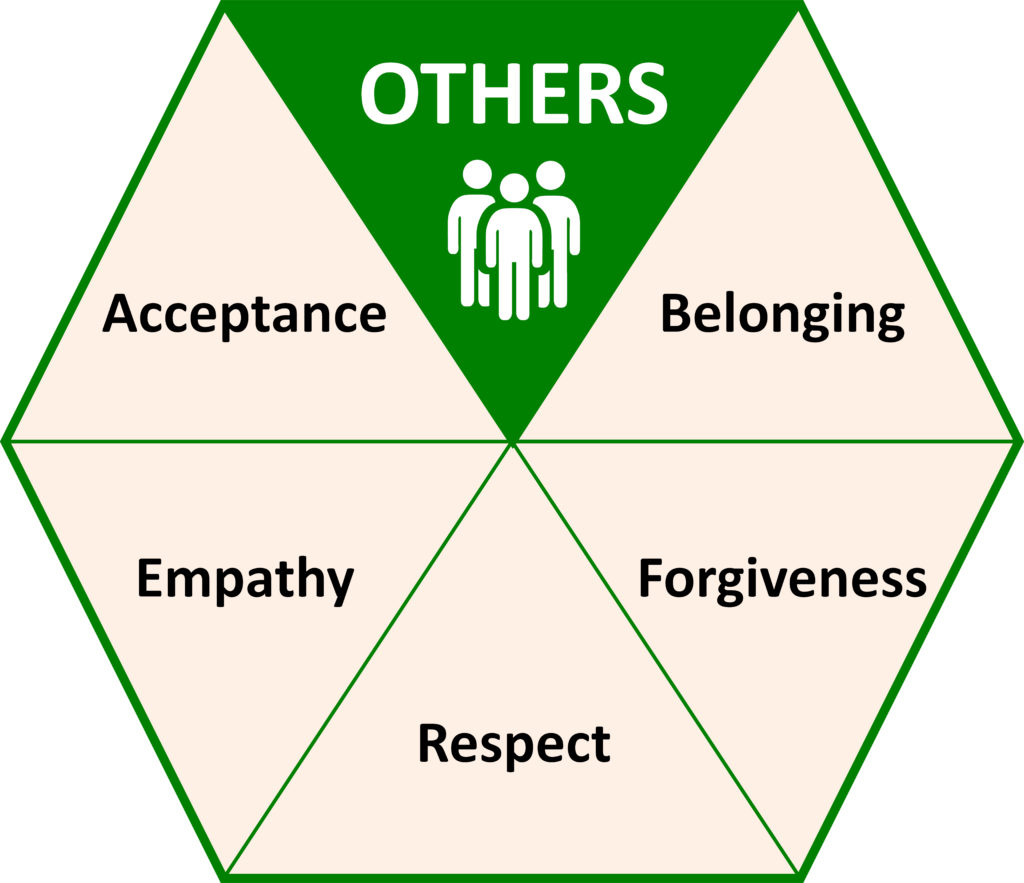
Sense of Others is an essential, interconnected part of the self. One lives in some degree of connection in all aspects of life. A well-developed Sense of Others is pivotal to resilience because we live in an interdependent world. Adversities will almost always involve others, either as part of the problem or part of the solution (or both). In exercising this sense, one’s empathy for others lets one identify with them, and the respect that one feels for others allows acceptance of who they are despite differences. One has developed a predisposition to be open and kind, and generally one’s style of interaction with others creates a supportive network that fosters essential feelings of belonging, especially critical when dealing with adversity. One’s capacity for forgiveness and skills in finding compromise are especially useful when engaged in problem-solving with others.
Resilience is based on compassion for ourselves as well as compassion for others. —Sharon Salzberg
Without a Strong Sense of Others …
Without a strong, positive Sense of Others … your ability to tap into the strength, wisdom, and support of others could be impaired. You may not be an effective team player and may not get involved in collaborative problem-solving efforts. You may also experience a sense of isolation.
Mighty trees will fall, their trunks becoming fertile ground for new growth and life yet unseen. So it would be with our elders and all of the generations to come after them. —Barbara Becker, Heartwood
Action Planning
If you want to develop your Sense of Others further … take a candid look at your “support network” – especially your family and friends – and ask whether you are investing the effort to nurture these relationships. Also examine your own attitude and investment in these connections. Ask yourself whether you’re doing your part to be there for and support those in your life. Additionally, in interacting with others, it often helps to build your empathy strength. Deliberately take moments to take yourself out of the picture and imagine yourself in the place of others. Try to better understand their orientation and motivation with greater sensitivity.
Possible Actions – Perceive & Ponder
- Take a candid look at your ‘support network’ – especially your family and friends – and ask whether you’re doing your part to be present and supportive for them.
- Consider if there are any people in your life you need to forgive or seek forgiveness from and/or relationships you would like to strengthen or renew.
Possible Actions – Engage & Connect
- Practice the ‘golden rule’ and treat others the way you yourself would like to be treated and along these lines, be kind to yourself and watch for ‘negative self-talk’.
- When interacting with others, deliberately refrain from commenting and spend more time listening. Try for a moment to imagine yourself in another person’s place to practice empathy and gain understanding of others’ perspectives and motivation.
Possible Actions – Plan & Pursue
- Seek input from trusted advisors in both your personal and professional life. Ask for feedback on how you can strengthen your sense of others.
- Take steps to strengthen and promote respect within the community around you both in your personal and professional life.
If we accept the wisdom … and the evidence … that our relationships are among our most valuable tools for sustaining health and happiness, then choosing to invest time and energy in them today becomes vitally important. —Robert Waldinger, Marc Schultz